

Kristen Hatch's piece,
Little Butches: Tomboys in Hollywood Film, discusses
the evolution of the traditional tomboy image in Hollywood movies.
According to the writer, the image of tomboys in Hollywood has evolved
from a representation of immaturity in young women to a reaffirmation of
heteronomativity in our society. Hatch argues that the image of tomboys
in Hollywood was used as a representation of sexual immaturity and
childhood. The author also discusses the gradual transformation of
Hollywood's tomboy into a 'woman' who embraces femininity and
heteronormativity is so assured that it serves as as a symbol of the
"disciplining of gender and desire" (70).


As
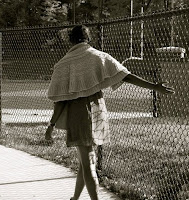
I was reading this piece, I found myself relating to the metamorphic
process of some of the characters Hatch discusses. I was definitely a
tomboy when I was younger. The age gap between myself and my sisters
made it almost impossible for us to relate to each other. Instead, I
hung out with my male cousins and I adopted their mannerisms over time. I
even began to wear my cousin's clothes because it just didn't seem
practical to me to try and play with the boys in my 'girl clothes.'
Although I do not remember ever having a desire to
actually be a
boy, I do remember always feeling a lot more comfortable wearing
basketball shorts and t-shirts, putting my hair into a ponytail and
playing soccer with my male cousins. I was not a big fan of the dolls my
parents bought me, but I loved my SEGA and I loved playing Sonic and
Mortal Combat video games. I loved running around and climbing trees and
I absolutely hated it when my mom would make me play with my girl
cousins because I thought sitting around playing with dolls was boring.
At the time, I didn't see anything wrong with this. I didn't want to be a
boy and I loved the Powderpuff girls.

As
I got older, however, my feminine side became more noticeable. I went
through a phase when I was about 14 when I wore pink every single day of
the week. I didn't do it as a way to declare my femininity, I just
became obsessed with the color for some reason. I started fixing my hair
a lot more often and wearing a lot more skirts as opposed to pants.
Although my outward appearance became more feminine, I still retained a
lot of the masculine mannerisms I had adopted from my male cousins. I
still played/watched a lot of soccer, I still played video games, I
still hung out with the boys, and my mom always commented on my
'boyish-mindset.' Although I have gradually become increasingly
feminine, in the traditional sense of the word, it is apparent that I
still retain a lot of the more traditional male characteristics in my
mannerism, my tendency to cuss like a sailor, my assertiveness, my
loudness, etc. I still love to watch sports, I'm still highly
competitive and a part of one of the most aggressive women's flag
football teams at Denison as an offensive line-woman (and I proudly rock my pink cleats on the field!). All of these
things still mark me as a tomboy in my family's eyes, but to me they're
simply a part of my personality and I fully accept and embrace that
about myself.


 In her article, Popular
Culture and Queer Representation, Diane Raymond discusses analyzing media
from a queer or non-dominant perspective.
Specifically she looks at three patterns within television comedies, 1) the increased appearance of
GLBT major or supporting characters on television, 2) the gay pretender, and 3)
the straight guy that is mistaken to be gay.
I think it is also interesting to point out another trope that some
television shows have in which the gay character is misunderstood and not known
to be gay. This is something I would like
to call the misunderstood gay, and I believe that Will and Grace is a perfect example of this. On the show, it is clearly known to all of
the viewers that Jack is gay. One can
tell by his mannerisms, the way he acts, the way he talks, and some of the
different things he does. The one that
comes to mind for me is his “Just Jack” pose.
He has a lot of flamboyant gestures and facial expressions that show
that he is seemingly gay, however, his mother, who has raised him, fails to
realize that he is gay (Raymond, p. 102). On the other hand, Will is gay, but not many
people can come to realize this, especially first time viewers. I know that when I first watched an episode I
did not know that Will was gay, too. The
viewers may misunderstand Will because he lives with Grace, therefore some first
time viewers may appear to believe that they are a couple. Also, Will thinks that some of the things
Jack does are just ridiculous, which is a typical thought of a straight man
about a gay man. Will has a way of
hiding his sexuality, as if it is not acceptable for him to be gay. No matter how gay or how “out” the character
is on television, he/she is always misunderstood, misinterpreted, or
mistreated.


