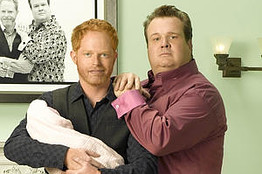
 I appreciate that Raymond believes that her three glbt tropes inside comedy can potentially subvert heterosexual norms. However, I find it more significant that she argues the idea that the elimination of glbts in television is not imminent for a viewer to have their homophobic tensions resolved. As I read this piece, the show Modern Family kept coming to mind. The three families that are part of the show all live similar lifestyles except for maybe one or two evident characteristics. Cameron and Mitchell, the gay couple, share similar characteristics to the Pritchett's and the Dunphy's. They live in suburbia with the American dream and a lavish lifestyle. Raymond states that "media critics pointed out [the] rare depictions of glbt people tended both to dichotomize anyone glbt as victim or villain and to reinforce demeaning stereotypes and caricatures" (Raymond, 101). This is not the case for Cameron and Mitchell. They are characterized as equal to the other families. They are showcased equally and are just as important as any of the other characters.
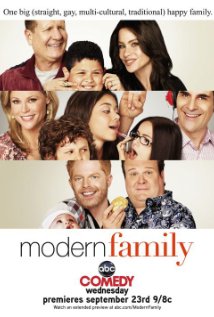 For many viewers this couple should upset them. However, people stay at ease because of the comedic and relatable characters the show casts to its audiences. Raymond argues that in order for people to accept a gay couple in any show, the show's writers would have to end each episode with a "reinforcement of heterosexuality or a containment of homosexuality" (Raymond, 100). But, instead they go another route. Raymond believes that instead the writers can try to queer the straight, or make 'queer a [normal attribute] in mainstream culture" (Raymond, 100).
Cameron and Mitchell share so many other characteristics with the middle-class man. They have jobs, dreams, money, house, child, and white-picket fence. There are overwhelming similarities between them and the viewer that makes it almost impossible for them to discredit the couple. And through the addition of comedy and societal acceptance, the viewer begins to readily watch the show and subconsciously accept this queer couple.
Glbt presence is increasing in television and slowly being accepted by the American culture. However, they cannot be flamboyant or over the top gay. Modern Family has proven that glbts can make it in television, however, there is a certain way to go about it. They cannot try to take over, but they can start being accepted through being portrayed as normal, happy, and similar to their viewers.
Raymond believes that the emergence of the glbt persona in television will "give birth to new meanings and new signifiers attached to queer sexuality" (Raymond, 109). But, I believe that in order to keep the momentum going for these characters, writers of shows need to be careful with how large of an initial impact these characters are going make on the show's plot. They need to start off with small representations of homosexuality before they try to take control, or they will have their audiences straying back to their old homophobic stereotypes and attitudes.